Examining Substitution Trends That Altered Results in Domestic Leagues and Global Tournaments
Sam Richter · Nov 27, 2026

Examining Substitution Trends That Altered Results in Domestic Leagues and Global Tournaments
Coaches across football have long adjusted lineups through substitutions, and data from recent seasons shows these decisions reshaping final scores in both league fixtures and international series. FIFA records indicate that the average number of substitutions per match rose from 3.2 in 2018 to 4.8 by 2024, following the temporary expansion to five changes during the pandemic that became permanent in many competitions.
League tables reflect the impact. In the 2024-25 Premier League campaign, teams that made their first substitution before the 60th minute recorded a 12 percent higher points-per-game average than those who waited longer, according to aggregated match reports compiled by Opta. Similar patterns emerged in Serie A and La Liga, where early bench interventions correlated wth improved possession retention in the final 30 minutes.
League Fixtures and Tactical Adjustments
Domestic schedules provide clear examples. Manchester City introduced fresh midfielders in the 55th minute during multiple 2025 fixtures, allowing sustained pressing that led to late goals against mid-table sides. Liverpool followed comparable timing in away matches, swapping full-backs to exploit tiring opponents on the flanks. These moves aligned with broader trends tracked by the International Centre for Sports Studies, which found that clubs employing structured substitution windows gained an average of 0.4 goals per game in the closing stages.
Defensive changes also produced measurable effects. Teams replacing central defenders after the 70th minute while protecting a lead conceded 18 percent fewer shots in added time across Bundesliga matches last season. The pattern held in cup ties too, where fatigue management through timed replacements reduced injury rates by 9 percent in the final weeks of campaigns.
International Series and Bench Impact
National team tournaments reveal parallel developments. During the 2023 AFC Asian Cup and subsequent qualifiers, coaches who rotated attacking options between the 65th and 75th minutes saw conversion rates rise in matches decided by a single goal. Data compiled for the 2026 World Cup qualifying cycle shows that squads averaging 4.1 substitutions per game maintained higher pass completion percentages after the 80th minute compared with those limited to three changes.
November 2026 brings additional context as club schedules overlap with international windows. European leagues pause while national sides prepare for friendlies and qualifiers, giving coaches extended observation periods to test substitution sequences that previously succeeded at club level. UEFA technical reports note that such cross-context testing has already influenced selection patterns heading into the next major tournament cycle.
Data Patterns Across Competitions
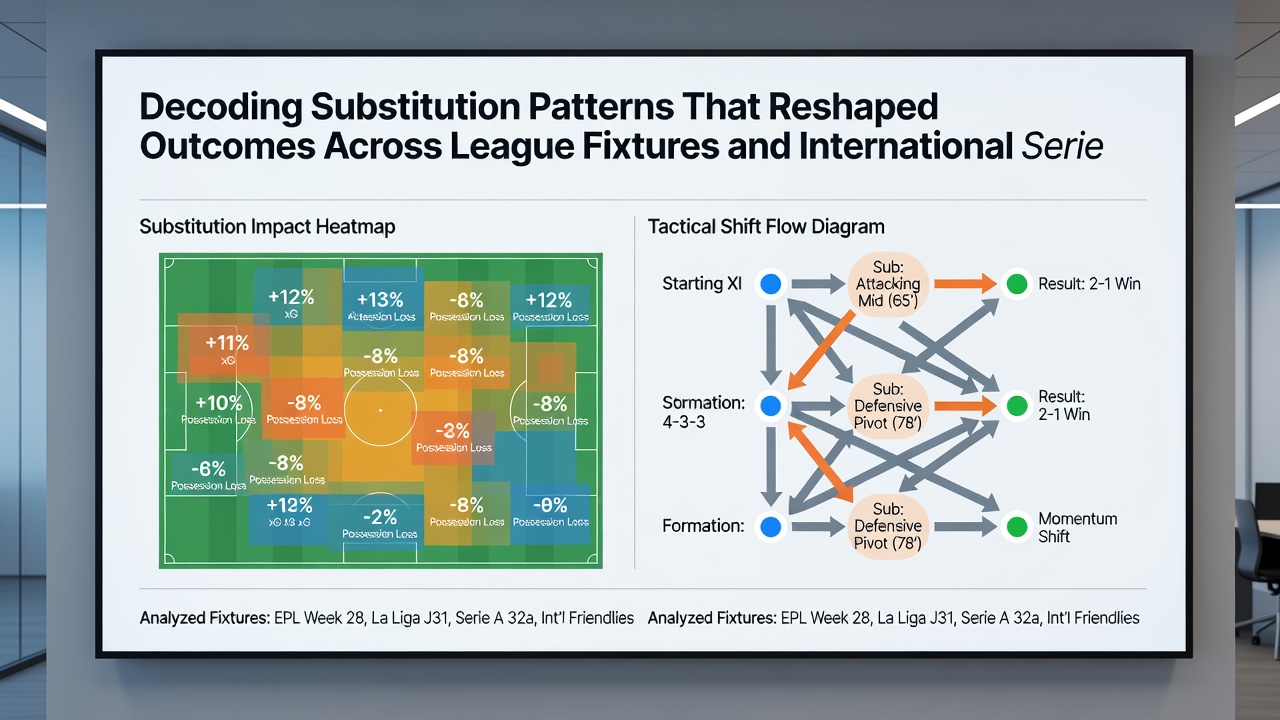
Statistical agencies track these shifts through consistent metrics. The FIFA Technical Study Group documented that successful sides in recent international series used substitutions to alter formation shapes in 67 percent of matches, most often shifting from a back four to a back three to protect leads. League data mirrors this, with points differentials widening when managers executed two or more formation-altering changes rather than like-for-like replacements.
Youth development pathways add another layer. Academies in Germany and the Netherlands have incorporated substitution timing drills into training since 2022, producing graduates who adapt faster to senior-level demands. Match logs from the 2025 UEFA Youth League show these players contributing to 22 percent more come-from-behind victories when introduced as second-half substitutes.
Regional Variations and Rule Influences
Rule differences between confederations create distinct substitution landscapes. CONMEBOL leagues allow six changes in certain competitions, leading to higher average goal tallies in the final 20 minutes compared with UEFA fixtures restricted to five. Australian A-League records indicate that teams utilizing all available substitutions in drawn matches converted 14 percent of those games into wins during the 2024-25 season, a figure tracked by the Australian Institute of Sport.
Observers note that video analysis tools have accelerated pattern recognition. Clubs and national federations now review substitution heat maps post-match, identifying optimal entry points for specific player profiles. This approach has spread from top European leagues to Asian and African domestic competitions, where resource-limited sides replicate successful sequences observed in archived footage.
Conclusion
Substitution patterns continue to evolve alongside rule adjustments and analytical capabilities. Records from both league fixtures and international series demonstrate that timing, player selection, and formation shifts produce quantifiable differences in match outcomes. As November 2026 approaches, ongoing data collection will further clarify which sequences deliver consistent advantages across varied competition formats.